


21 July 2026
How Self-Storage Helps E-Commerce Scale Without a Warehouse

Singapore’s e-commerce market reached US$18 billion in 2025 and is forecast to grow at around 9% a year through 20291, which means inventory volumes for active sellers are climbing faster than spare bedrooms and dining tables can absorb. The next step has historically been a commercial warehouse rental, which typically runs on a two- to three-year minimum at $1.60 to $2.20 per square foot a month, on a footprint sized for a much larger operation than most early-stage sellers actually need.
Self-storage with fulfilment support solves the same operational problem at a fraction of the footprint, with month-to-month terms that scale with order volume rather than ahead of it. Here’s how starting with the right storage foundation enables e-commerce operators to scale with orders and grow their businesses.
The Problem With Traditional Warehousing
The standard warehouse-lease model in Singapore creates three operational drags for small e-commerce businesses:
- Oversized footprint, billed in full. Commercial warehouses are sized for tenants moving thousands of SKUs per month, with floor plans starting around 1,000 sq ft and scaling up. For a small e-commerce operator carrying 200 to 500 active SKUs, most of that space sits unused, and the rent is billed on the full square footage regardless.
- Multi-year lock-in. Standard leases run for two to three years, committing the business to fixed overhead across quarters that may not align with sales seasons.
- Operational complexity. Staffing, security, utilities, and lease administration all scale with the rent, adding weight that most small teams do not have the margin to carry.
Why Self-Storage is a Smarter Starting Point
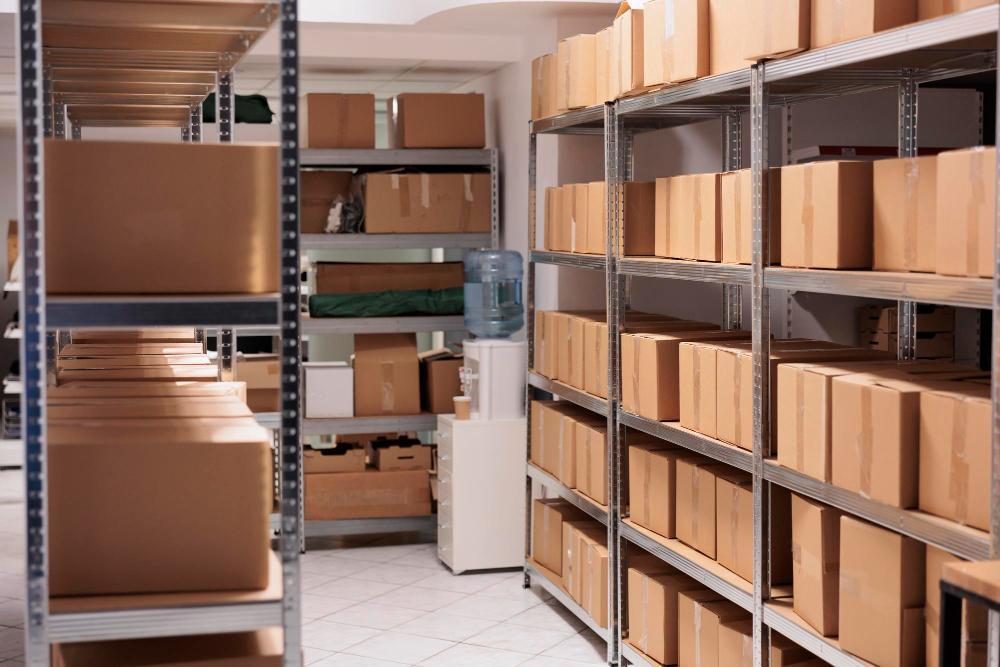
Self-storage units are sized in increments that map cleanly to early- and mid-stage e-commerce operations. Contracts run month-to-month, capacity scales with order volume, and seasonal spikes around sales days and year-end can be absorbed by upsizing for a single quarter, then releasing the space once the cycle ends.
At Urban Space, self-service storage unit rentals start at $70 a month for a locker, $80 for a small unit, and $150 for a medium unit, equivalent to a one-bedroom flat, with a pricing structure that scales according to needs. Additional features like climate control, 24/7 access, and no lock-in make self-storage a viable cost case for Singapore SMEs looking to reduce overhead and ditch an expensive warehouse lease.
Key Ways Self-Storage Supports E-Commerce Operations

The operational case for self-storage runs across four functions, each tied to a specific point in the e-commerce order cycle.
Inventory Storage and Organisation
Climate-controlled e-commerce storage maintains a stable temperature and humidity, preventing the slow-build damage that home storage may cause. Singapore’s average relative humidity is around 82% year-round2, which corrodes electronics, weakens adhesives, warps cardboard packaging, and yellows paper-based stock over time. With climate-controlled storage, write-offs from humidity damage drop close to zero, and bulk-purchased stock retains its retail value over long holding periods.
Order Preparation and Packaging
Packing a hundred orders a week from a dining table is workable. Packing four hundred is not. A storage space with an office lets teams pack orders correctly with better organisation, and invoice accurately with clear product counts. The arrangement keeps fulfilment efficient and the home environment intact, particularly for operators running both customer-facing and back-end work in the same week.
Courier Pick-Up and Drop-Off Integration
E-commerce warehouse fulfilment reduces friction in order handoffs. Couriers can collect from the facility during scheduled runs; last-mile partners can pick up batches; and the operator need not be physically present for every collection. For solo founders and two-person teams, this is often where the time savings show up.
Managing Seasonal Stock Surges
Sales cycles in Singapore concentrate around 9.9, 11.11, 12.12, year-end, and Lunar New Year. Stock-up phases ahead of these cycles can double or triple inventory volume for six to ten weeks. Month-to-month storage contracts allow operators to upsize the unit for the peak window and release it once the season clears.
What to Look for in a Storage Facility as an E-commerce Business
Five factors decide whether a facility supports e-commerce operations or just stores boxes:
- Location and accessibility: central or city-fringe locations cut courier travel time and make twice-daily access to stock practical. Loading and unloading should be straightforward.
- Security and access hours: 24/7 access supports late-night fulfilment cycles. CCTV, personalised PIN entry, and individual unit locks should all be standard.
- Climate control: essential for any product category exposed to Singapore’s humidity, including electronics, beauty products, and paper-based stock.
- Fulfilment and logistics support: courier integration, on-site packing supplies, and an adjacent workspace for admin or customer service make for a legal, easy-to-set-up office when needed.
- Contract flexibility: month-to-month terms with the option to upsize or downsize without penalty match the realities of a growing e-commerce business.
How Urban Space Supports Growing E-Commerce Businesses
Scaling an e-commerce business in Singapore is a structural problem before it becomes a financial one. The right storage setup at the right stage absorbs growth without forcing a premature warehouse commitment. The wrong one locks in overheads that the business cannot yet sustain. Self-storage with workspace and fulfilment support gives lean operators a working alternative to a traditional warehouse, on terms that scale with the actual rate of order growth.
At Urban Space, we combine self-storage, workspace, and a fulfilment hub in a single location, eliminating the need to operate across three separate sites. The setup provides lean teams with an integrated base for storage, fulfilment, and front-of-house operations, without violating laws that forbid using a warehouse as an office.
Move your inventory and packing operations into a flexible self-storage and fulfilment setup at Urban Space, and let the storage configuration scale with the business rather than ahead of it.
References


 WhatsApp
  Email
Email  Call Us